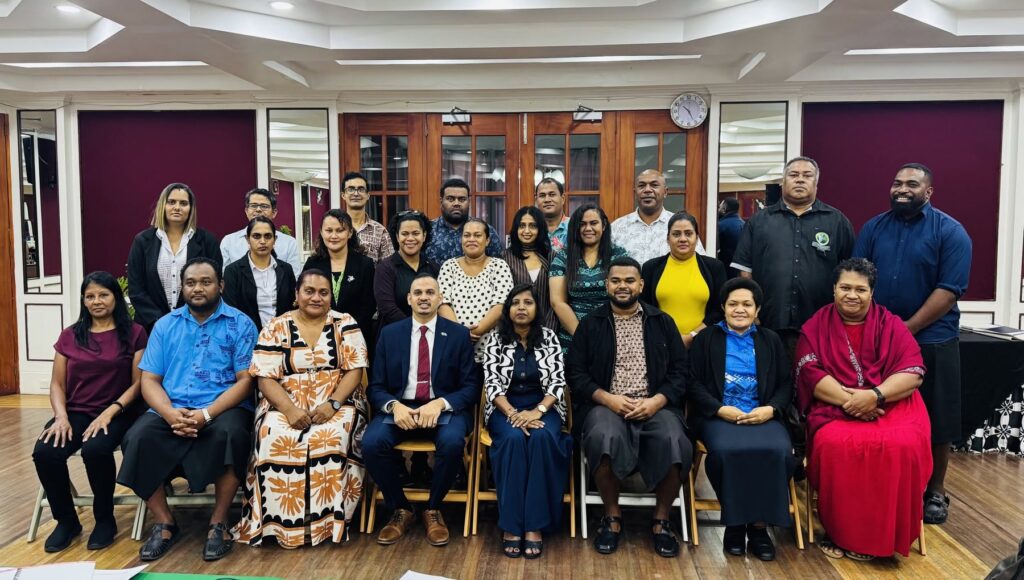
The Ministry of Environment and Climate Change has concluded a two-day National Reporting and Validation Workshop to support the preparation of Fiji’s Sixth National Report under the Stockholm Convention on Persistent Organic Pollutants.
The workshop brought together government agencies, statutory bodies, non-governmental organisations, private sector representatives and technical experts to compile, review and validate national data before submission to the Stockholm Convention Secretariat.
The Stockholm Convention is a global treaty that seeks to reduce and eliminate chemicals that remain in the environment for long periods, accumulate through food chains, and pose serious risks to human health, biodiversity and ecosystems.
There are 4 key global conventions governing control of waste and chemicals, which are Basel, Rotterdam, Minamata and Stockholm Conventions.
Fiji is party to only 1 of the 4 and is currently in the process of acceding to the remaining 3. Fiji signed and ratified the Stockholm Convention in June 2001, and the treaty entered into force for Fiji in May 2004.
Opening the workshop, Permanent Secretary for Environment and Climate Change, Dr Sivendra Michael, said the reporting process is not simply about meeting an international obligation.
“This report must tell us where we are, what progress we have made, and where stronger action is still needed. It must help us make better decisions, target investment, and protect our people from chemicals that can cause long-term harm,” Dr Michael said.
He said persistent organic pollutants, often referred to as “forever chemicals”, are dangerous because they do not disappear easily. They remain in the environment, move through air, water and soil, and build up in living organisms over time.
Dr Michael said Fiji’s work under the Stockholm Convention must be treated as part of a broader national responsibility to strengthen chemicals and hazardous waste management.
He also highlighted the establishment of the Ministry’s Scientific Laboratory, which will support stronger monitoring of water quality, air quality and chemicals of concern. The laboratory will strengthen evidence-based decision-making and improve Fiji’s ability to detect, assess and respond to environmental risks.
The Ministry said the Sixth National Report will help guide future national action to reduce pollution, improve chemicals management, and safeguard the health of present and future generations.