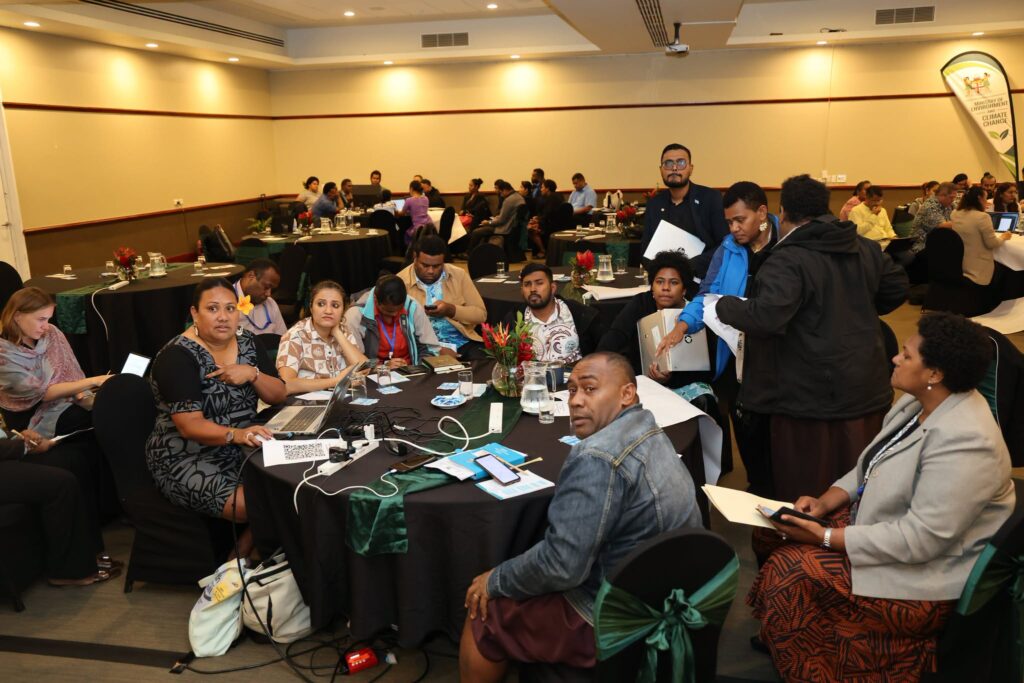
 Fiji’s National State of the Environment (SoE) Report 2026 has reached an important stage, with Government agencies, technical experts, data custodians and other national stakeholders meeting in Suva today (03.09.26) to validate the data and information that will inform the final report.
The Ministry of Environment and Climate Change today (03.09.26) convened the National Validation Workshop for the SOE 2026 in Suva, with technical support from the Secretariat of the Pacific Regional Environment Programme – SPREP and NatureFiji-MareqetiViti.
The SoE Report is Fiji’s comprehensive assessment of the condition and trends of the country’s environment. Its preparation is required under Section 23(1) of the Environment Management Act 2005, which provides for a national State of the Environment Report every five years.
For the public, the report will provide an evidence-based picture of what is happening to Fiji’s environment, the pressures driving environmental change, the impacts on ecosystems and people, and how effectively these challenges are being addressed.
Director Environment, Ms. Senimili Nakora, while delivering the opening remarks, emphasised that the report must ultimately support action and informed decision-making.
“The State of the Environment Report should not be a standalone publication, but should be actively used to guide policy implementation, environmental management, enforcement, planning and investment across Government.”
Today’s workshop is the final broad stakeholder quality-assurance stage before the report’s completion. Participants are examining the draft findings to ensure they are accurate, balanced and nationally relevant, while also checking data sources, environmental indicators, trends, limitations and areas where further evidence may be required.
The validation follows an extensive process beginning with a national inception workshop, followed by consultations with data custodians and technical reviews. During today’s session, stakeholders are reviewing indicators through thematic discussions and cross-checking each other’s findings before collectively considering unresolved or cross-cutting issues.
Importantly, validation does not mean that every dataset is automatically accepted.
Following the workshop, the validation record will be consolidated, agreed corrections incorporated and outstanding evidence followed up. The final draft will then proceed through the required Government submission and approval process before public dissemination, providing Fiji with a stronger evidence base to guide environmental policy, planning and protection.