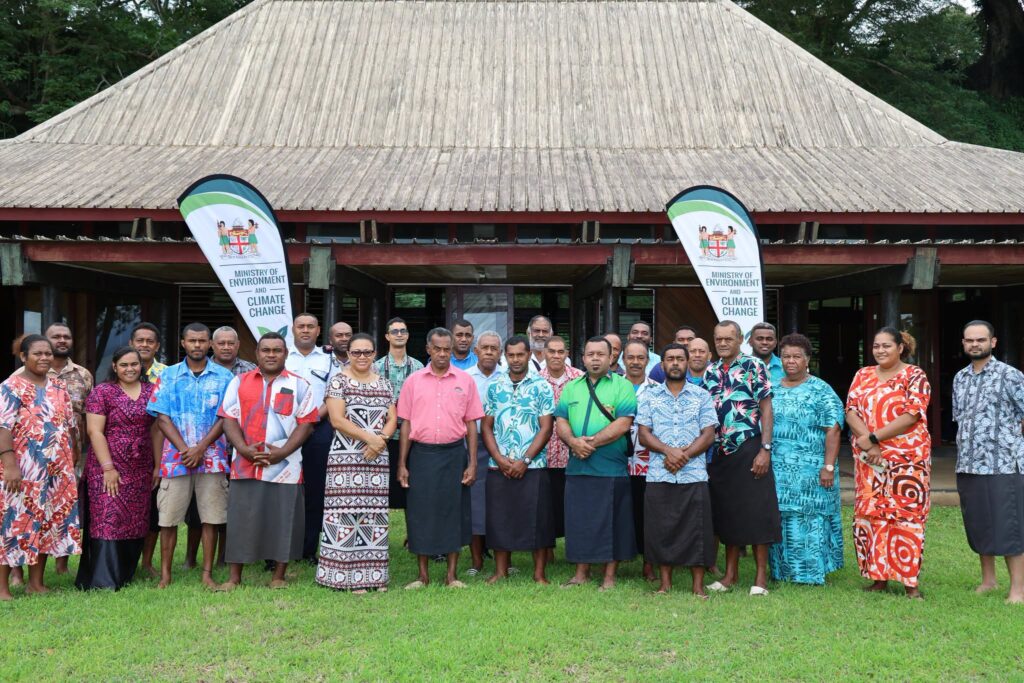
The Ministry of Environment and Climate Change, in partnership with NatureFiji-MareqetiViti, has concluded the Northern Division consultations for Fiji’s Seventh National Report (7NR) to the Convention on Biological Diversity (CBD), held at the Somosomo Village Hall in Taveuni.
The consultations brought together government agencies, provincial representatives, traditional resource owners, civil society organisations, development partners and community members to share their experiences, knowledge and perspectives on biodiversity conservation.
The Seventh National Report (2020-2025) provided an important opportunity for Fiji to assess progress in protecting its biodiversity, identify challenges and strengthen future conservation efforts. The report will contribute to Fiji’s obligations under the Convention on Biological Diversity and help guide future biodiversity planning, investment and action.
Participants were reminded of Taveuni’s globally significant biodiversity, including its forests, watersheds, freshwater systems, mangroves and marine habitats that support livelihoods, tourism and climate resilience. Discussions also highlighted how conservation initiatives undertaken across the island during the reporting period contribute to the global effort to halt and reverse biodiversity loss for the benefit of people and the planet.
Known as Fiji’s Garden Island, Taveuni is home to several species found nowhere else in the world, including the Tagimoucia flower, the Fiji flying fox (Beka Mirimiri), the Bouma palm and the Taveuni blind snake. It is also the only island in Fiji that hosts all six species of Fiji’s bats. The establishment of the Taveuni Forest Reserve in 1914, the Ravilevu Nature Reserve in 1959 and the Bouma National Heritage Park in 1991 has played a significant role in protecting these unique species and their habitats.
The Ministry emphasised that safeguarding Fiji’s biodiversity cannot be achieved by the government alone. It requires strong partnerships between communities, traditional resource owners, conservation organisations, development partners and government agencies.
Information gathered through the nationwide consultations will contribute to Fiji’s Seventh National Report and help measure progress towards global biodiversity targets, including the commitment to effectively conserve and manage at least 30% of terrestrial, inland water, coastal and marine areas by 2030.
Following the conclusion of the Northern Division consultations, the Ministry will continue its outreach programme in the Western in the following dates and venue:
 22 June – Sigatoka, Ramada Coral Coast Convention Centre 23 June – Nadi, Ratson Hotel Convention Centre 24 June – Lautoka, Tanoa Waterfront Convention Centre 25 June – Ba, Ba Town Council Civic Hall 26 June – Tavua, Garvey Park Hall 29 June – Rakiraki, Tanoa Rakiraki Hotel Convention Centre 30 June – Nausori, Tailevu Provincial Council Hall
The Ministry encourages all stakeholders to participate, share their experiences and provide recommendations to help strengthen Fiji’s biodiversity conservation efforts and ensure the Seventh National Report reflects the realities, achievements and challenges on the ground.