
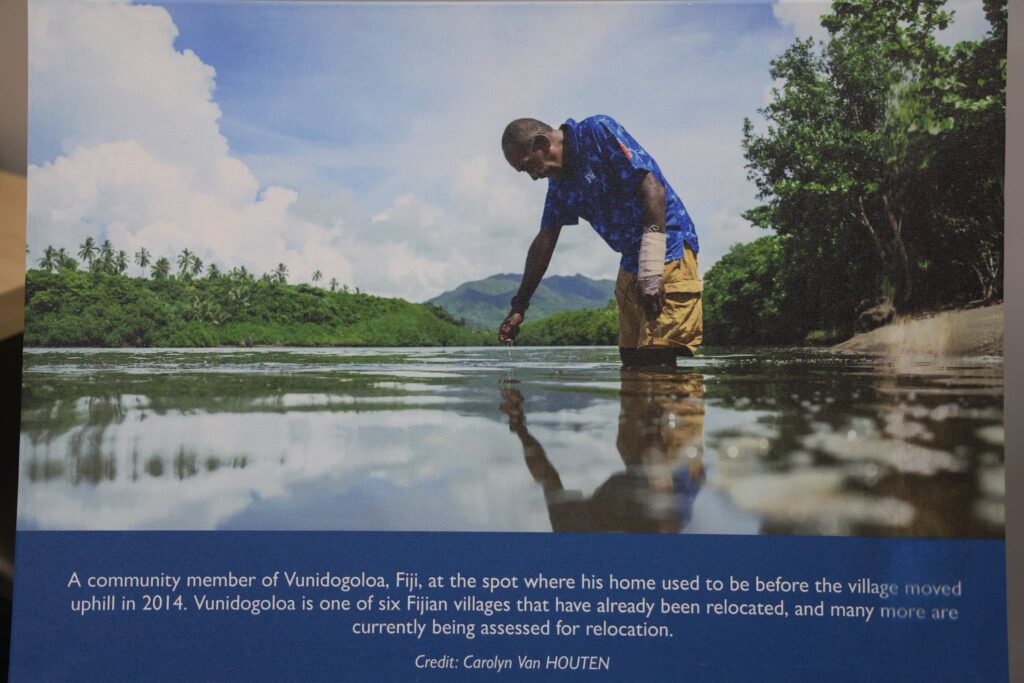
Communities across Fiji are increasingly facing the impacts of climate change, making planned relocation one of the country’s most important and sensitive responsibilities. It is about far more than moving people; it is about protecting lives while preserving culture, identity, livelihoods and the deep connection to Vanua. Relocation is a measure of last resort, once all Adaptation interventions have been exhausted; planned relocation then comes in action.
The Ministry of Environment and Climate Change’s Director for Climate Change, Ms Senivasa Waqairamasi, today chaired the 4th Quarter Meeting of the Fijian Taskforce on the Relocation and Displacement of Communities Vulnerable to the Impacts of Climate Change in Suva.
The meeting brought together key government ministries, development partners and invited observers to discuss progress on ongoing relocation projects, climate mobility initiatives and future planning.
Taskforce members endorsed in principle the Cultural Checklist for Planned Relocation in Fiji, recognising the importance of safeguarding cultural values while ensuring the inclusion of women and children.
Discussions also advanced the Free, Prior and Informed Consent (FPIC) Guiding Framework, reinforcing community participation in relocation decisions.
The Taskforce also received updates on parametric insurance, and heard from the International Organization for Migration (IOM) on climate mobility initiatives and funding support, reaffirming the importance of strong partnerships in delivering safe, inclusive and people-centred planned relocation.
The Ministry of Environment and Climate Change remains committed to strengthening Fiji’s planned relocation framework to ensure communities vulnerable to the impacts of climate change are supported through transparent, inclusive and culturally appropriate processes. By working closely with communities, government agencies and development partners, the Ministry is advancing practical solutions that protect lives, uphold the dignity and rights of affected people, and build resilient communities for future generations.
Ministry acknowledges the support of GIZ for their continued partnership in the Taskforce.